Middle Distillate Cracks Widen as Gulf Refining Outages and Feedstock Curbs Compound
Refining margins for diesel and jet fuel have surged as nearly 3 million barrels daily of Gulf processing capacity sits offline due to damage and bottlenecked export channels. Compounded by European feedstock shortfalls and global capacity constraints, refining cracks face prolonged upward pressure.
Your ad here — 728×90 banner space
The global refining system is facing severe operational dislocation as downstream disruptions from the Persian Gulf reverberate through international fuel hubs. The International Energy Agency calculates that nearly 3 million barrels per day of refining capacity across Gulf littoral states remains idle, incapacitated either by physical standoff strikes against utility infrastructure or by the sheer inability to export finished products through blocked marine corridors. In typical trading environments, Gulf refiners contribute over 3.3 million barrels per day of clean refined petroleum products—principally ultra-low-sulfur diesel and kerosene-type jet fuel—alongside 1.5 million barrels per day of liquefied petroleum gas (LPG).
The sudden withdrawal of these export barrels has triggered historic crack spreads across Singapore, Rotterdam, and the US Gulf Coast. Compounding the regional deficit, wider global refining capacity is experiencing significant constraints: over 8 million barrels per day of distillation capacity is currently offline across Asia, the Middle East, and Russia due to combined maintenance backlogs, geopolitical friction, and critical feedstock shortages. Refineries in non-producing nations have been forced to throttle crude distillation unit runs because replacement sour feedstocks cannot be secured on prompt delivery.
Middle distillates represent the most acute industrial vulnerability. European utility and transport sectors, already operating with tight seasonal diesel buffers, face compounding logistics expenses as merchant product carriers must divert around the Cape of Good Hope or pay steep war-risk surcharges. Because alternative pipeline infrastructure in the Arabian Peninsula is engineered primarily to transport unrefined crude rather than clean petroleum products, downstream supply chains cannot readily bypass the Hormuz chokepoint. Until refining operations inside the Gulf can restore reliable export flows, end-users face sustained price premiums on heating fuels, commercial transport diesel, and aviation kerosene.
Related Intel
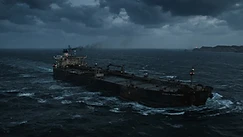
Diverging Transit Estimates Expose Fog of War Across Middle East Energy Routes
Conflicting transit claims from Washington and maritime tracking services underscore how information warfare has become central to energy price discovery.
Dual Blockade Dynamics and War Risk Premiums Paralyze Hormuz Commercial Vessel Throughput
Structural maritime paralysis grips the Persian Gulf as war-risk insurance premiums reaching eight percent combine with active minelaying to throttle baseline throughput.
Strait Risk Matrix Elevates as Daily AIS Transits Compress to Low Single Digits
Real-time maritime tracking indicates commercial vessel transits through the Strait of Hormuz have collapsed to historic lows, with only four active merchant hulls tracked along the primary corridor.