Logistical Constraints: Air and Sea Transit Patterns Amid Escalating Tension
Major global airlines and shipping firms are altering routes and suspending services to the Middle East as security risks reach a critical threshold.

Your ad here — 728×90 banner space
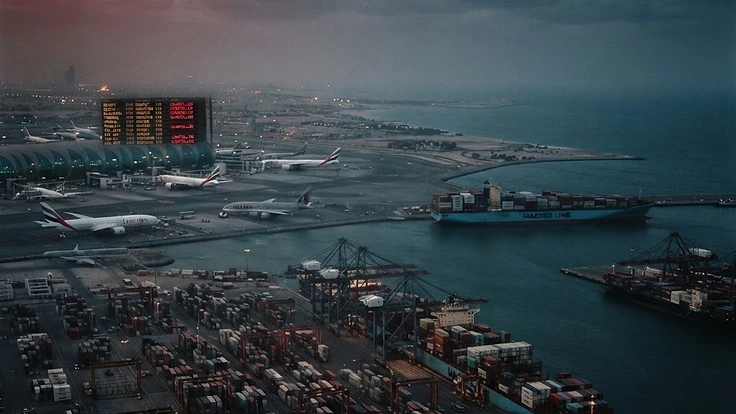
The logistics landscape in the Middle East is undergoing a rapid and defensive reconfiguration as the threat of a major regional conflict looms. Within the last 24 hours, the aviation industry has seen a wave of cancellations and reroutings reminiscent of the early days of the Ukraine conflict. Deutsche Lufthansa AG, along with its subsidiaries Swiss International Air Lines and Austrian Airlines, has extended its suspension of flights to Beirut, Lebanon, through August 12, citing the current security situation. Furthermore, the group has halted flights to and from Tel Aviv and Tehran. In North America, Delta Air Lines and United Airlines have suspended their services between the US and Israel indefinitely, affecting thousands of passengers and critical belly-cargo capacity. The Federal Aviation Administration (FAA) has issued updated Notices to Air Missions (NOTAMs) advising caution for flights over Iranian and Lebanese airspace. These disruptions are not limited to passenger travel; air freight rates in the region are beginning to climb as capacity tightens and insurance surcharges are implemented. In the maritime sector, the situation is equally tense. The Joint War Committee (JWC) of the London insurance market has maintained the high-risk designation for the Persian Gulf and the Red Sea. War risk insurance premiums for tankers transiting the Strait of Hormuz have seen a marginal increase as shipowners factor in the possibility of Iranian naval interference or drone strikes. The Suez Canal, already suffering from a significant drop in transit volume due to Houthi attacks in the Red Sea, faces further uncertainty. Shipping giants like Maersk and MSC continue to divert the majority of their Asia-Europe voyages around the Cape of Good Hope, a move that adds roughly 10 to 14 days to transit times and increases fuel costs. This 'new normal' in global shipping is contributing to port congestion in Western Europe and the Mediterranean. Furthermore, the potential for a 'shadow war' at sea, involving the seizure of tankers or GPS jamming, remains a primary concern for maritime security firms. The United Kingdom Maritime Trade Operations (UKMTO) has advised vessels to exercise extreme caution and report any suspicious activity. For global supply chains, the combination of air and sea disruptions in the Middle East represents a significant bottleneck that could reignite inflationary pressures if the situation is not resolved through diplomatic means. Logistics managers are increasingly turning to alternative routes, though these often come with higher costs and longer lead times.
Related Intel


IEA Warns of Severe Buffer Depletion as 400-Million-Barrel Release Strains Capacity
Global strategic oil reserves are running dangerously low following emergency releases, leaving consumer nations highly vulnerable to renewed Hormuz disruptions.
Crude Volatility Constrained as Washington Downplays Conflict Scope Amid Mixed Transit Signals
Crude benchmarks traded in tight bands as official rhetoric softened conflict timelines despite conflicting physical throughput figures across the Strait of Hormuz.
Brent Climbs Above $97 as Regional Retaliatory Strikes Target Kuwaiti Facilities
Crude benchmarks pushed higher with Brent crossing $97 following Iranian projectile attacks across regional states, while market participants watch OPEC+ supply adjustments.