Libya Declares Force Majeure as Political Crisis Halts Oil Exports
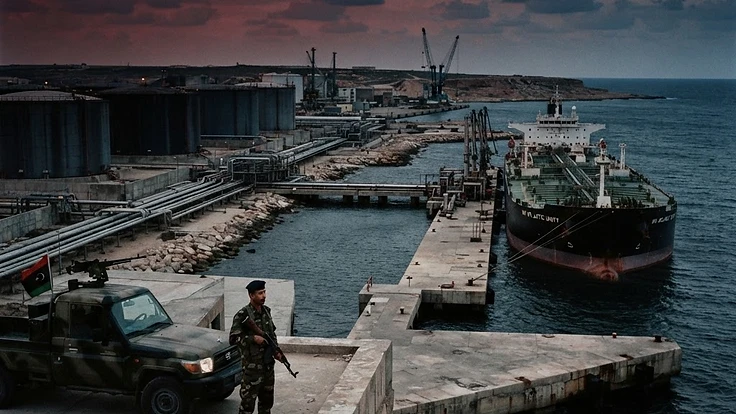
Eastern Libyan authorities have ordered a total shutdown of oil production and exports, removing over 1 million barrels per day from global markets.

Your ad here — 728×90 banner space
Global oil markets were jolted on Monday, August 26, as the eastern-based government in Libya announced the closure of all oil fields and export terminals under its control. The administration in Benghazi, led by Osama Hammad, declared a state of 'force majeure' on all oil facilities, citing a 'blatant assault' on the leadership of the Central Bank of Libya (CBL) by the rival Tripoli-based government. This move effectively halts production at major fields including Sharara, El Feel, and the Sirte Basin, which collectively account for the vast majority of Libya's 1.2 million barrels per day (bpd) output.
The crisis stems from a long-standing dispute over the control of oil revenues. The Tripoli-based Presidential Council recently attempted to replace the veteran Central Bank Governor Sadiq al-Kabir, a move the eastern authorities and the Libyan National Army (LNA) led by Khalifa Haftar have vehemently opposed. The CBL is the sole legal repository for Libyan oil revenue and pays state salaries across the divided nation. By shutting down the oil taps, the eastern government is attempting to leverage Libya's primary economic asset to force a reversal of the leadership change in Tripoli.
Market reaction was immediate, with Brent crude futures jumping over 3% to trade near $81 per barrel in early sessions before stabilizing. The loss of Libyan light sweet crude is particularly impactful for European refiners who rely on the short transit times across the Mediterranean. Analysts at the Hormuz Sentinel Desk observe that this supply shock comes at a time of heightened tension in the Middle East, reducing the global buffer for unexpected disruptions. While OPEC+ has plans to increase production in October, a prolonged Libyan outage could force the group to accelerate their timeline or risk a significant price spike. The international community, including the UN Support Mission in Libya (UNSMIL), has called for an immediate de-escalation, warning that the economic fallout will be borne by the Libyan people.
Related Intel


Brent Crude Climbs as Geopolitical Risk Returns to Energy Markets
Global oil prices have surged to $95 per barrel as renewed military activity in the Gulf threatens to disrupt critical energy transit routes.


Oil Prices Rally as US-Iran Military Exchanges Resume in the Gulf
Crude oil benchmarks surged as renewed military strikes between US and Iranian forces near the Strait of Hormuz reignited supply fears.


Brent Crude Surges as US-Iran Military Exchange Rattles Energy Markets
Brent crude prices climbed above $90 per barrel following a weekend of reciprocal military strikes between the United States and Iran near the Strait of Hormuz.