Iran’s Supreme Leader Orders Direct Retaliation Against Israel Following Haniyeh Assassination
Ayatollah Ali Khamenei has reportedly issued an order for a direct strike on Israel following the assassination of Hamas political leader Ismail Haniyeh in Tehran.

Your ad here — 728×90 banner space
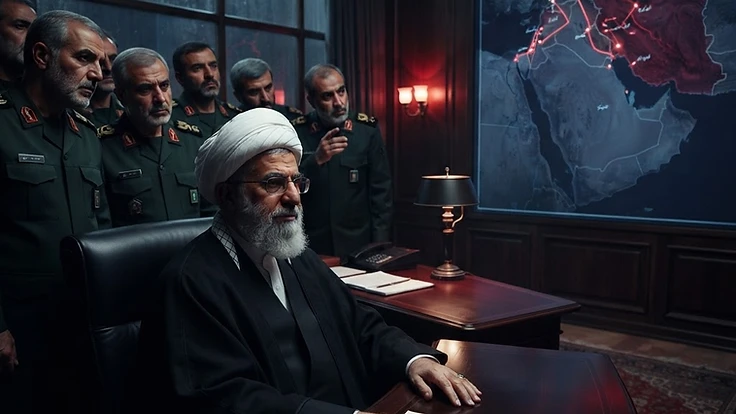
The geopolitical landscape in the Middle East has shifted dramatically following reports that Iran’s Supreme Leader, Ayatollah Ali Khamenei, has ordered a direct military strike against Israel. The order was issued during an emergency meeting of Iran’s Supreme National Security Council on Wednesday morning, shortly after the assassination of Hamas political chief Ismail Haniyeh in a high-security veterans' residence in Tehran. The assassination occurred just hours after Haniyeh attended the inauguration of Iran’s new president, Masoud Pezeshkian. While Israel has not officially claimed responsibility for the strike, Iranian officials and Hamas leadership have pointed the finger directly at Mossad, citing the precision and nature of the operation. The breach of Iranian sovereignty—occurring in the heart of the capital—has forced the hands of the Iranian establishment, which now views a response as a matter of national prestige and deterrence. Sources familiar with the council's discussions suggest that Iranian military commanders are considering a combined attack using long-range drones and missiles against military targets near Tel Aviv and Haifa. This follows the precedent set in April, when Iran launched hundreds of projectiles toward Israel in response to a strike on its consulate in Damascus. However, analysts suggest that this new directive may involve a more complex coordination with proxy forces in Lebanon, Yemen, and Iraq to overwhelm Israeli air defenses. The United States has responded by urging de-escalation through various diplomatic channels, though officials acknowledge the difficulty of containing the situation given the profile of the target and the location of the attack. In Tehran, the public mood is one of mourning and defiance, with Haniyeh's funeral procession drawing thousands before his body is transported to Doha for burial. The international community remains on high alert for the timing and scale of the expected retaliation, which could ignite a wider regional conflict that involves direct U.S. intervention to protect regional assets and allies.