Diplomatic Gauntlet: Iran Rejects Tripartite Call for Restraint Ahead of Gaza Ceasefire Talks
Tehran has dismissed pleas from France, Germany, and the UK to avoid retaliatory strikes against Israel, complicating high-stakes negotiations.
Your ad here — 728×90 banner space
The diplomatic landscape in the Middle East has reached a critical impasse as Iran officially rejected a joint plea for restraint from the leaders of France, Germany, and the United Kingdom. Known as the E3, French President Emmanuel Macron, German Chancellor Olaf Scholz, and UK Prime Minister Keir Starmer issued a rare collective statement yesterday, urging Tehran and its allies to refrain from any military action that could derail the 'last chance' for a Gaza ceasefire and hostage release deal. Iranian Foreign Ministry spokesperson Nasser Kanaani responded with a sharp rebuke, characterizing the E3 request as 'lacking political logic' and 'an excessive demand' that overlooks the violation of Iranian sovereignty. Kanaani asserted that Iran has an 'indisputable right' to punish Israel for the assassination of Hamas leader Ismail Haniyeh on Iranian soil. This rejection comes at a precarious moment for regional diplomacy, with a high-stakes summit scheduled for Thursday, August 15, in either Doha or Cairo. The United States, Qatar, and Egypt are attempting to broker a final agreement between Israel and Hamas to end the hostilities in Gaza, hoping that such a deal would provide Iran with a face-saving exit to de-escalate without a full-scale attack. However, Iranian officials have signaled that their response is separate from the ceasefire process, and that 'no amount of diplomatic pressure' will deter them from a 'proportional' retaliation. Western diplomats are concerned that an Iranian strike occurring during or immediately before the Thursday talks would effectively terminate the peace process. The E3 statement also expressed grave concern over the potential for a 'regional conflagration' that would have devastating consequences for Lebanon and the broader Levant. As of this morning, Tehran remains defiant, and the Iranian Revolutionary Guard Corps (IRGC) continues to conduct military exercises in its western provinces, signaling that preparations for a kinetic operation are ongoing.
Related Intel
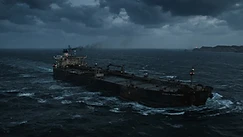
Diverging Transit Estimates Expose Fog of War Across Middle East Energy Routes
Conflicting transit claims from Washington and maritime tracking services underscore how information warfare has become central to energy price discovery.
Dual Blockade Dynamics and War Risk Premiums Paralyze Hormuz Commercial Vessel Throughput
Structural maritime paralysis grips the Persian Gulf as war-risk insurance premiums reaching eight percent combine with active minelaying to throttle baseline throughput.
Strait Risk Matrix Elevates as Daily AIS Transits Compress to Low Single Digits
Real-time maritime tracking indicates commercial vessel transits through the Strait of Hormuz have collapsed to historic lows, with only four active merchant hulls tracked along the primary corridor.